



BIDAYAH: Studi Ilmu-Ilmu Keislaman, Volume 17, Issue 1 (June 2026) features 8 scholarly research articles authored or co-authored by 23 researchers affiliated with various universities, Islamic higher education institutions, and educational organizations in Indonesia. This issue explores diverse topics in Islamic studies, including the concepts of waqf and ibtida’ in Qur’anic recitation and their implications for understanding meaning, the implementation of local wisdom-based curricula in West Aceh, educational strategies for improving Qur’anic reading skills, the al-dakhīl al-naqlī model in the story of the Companions of the Cave (Ashab al-Kahf) from Ibrahim Khalifah’s perspective in Ibn al-Jawzi’s exegesis, the significance of the same Qur’anic story in strengthening faith amid modern ideological pressures, multicultural education as a strategy for conflict resolution in Indonesia, the integration of Islamic values into mathematics education to foster students’ character development, and the role of scripts and languages in Indonesian Qur’anic exegesis, particularly the dynamics of individual and collective Sundanese interpretations. These contributions reflect interdisciplinary perspectives on Qur’anic studies, Islamic education, local wisdom, theology, and cultural studies. Through this collection, the issue promotes scholarly dialogue and contributes to the advancement of Islamic scholarship in addressing contemporary religious, educational, cultural, and social challenges.
BIDAYAH: Studi Ilmu-Ilmu Keislaman, Volume 16, Issue 2 (December 2025) features 7 scholarly research articles authored or co-authored by 12 researchers affiliated with at least 7 higher education institutions across Indonesia. This issue explores diverse topics in Islamic studies, including higher education management and institutional recovery from crises, the religious humanism of R.M.P. Sosrokartono and its manifestation in Javanese religious life, the relationship between sacredness, identity, and resistance in public discourse surrounding the hijab, learning and teaching ethics (adab) from the perspective of Imam Al-Ghazali, human rights violations experienced by Muslim communities in Pattani, digital transformation in Islamic elementary schools (madrasah ibtidaiyah) in Banda Aceh and West Aceh, and the role of sorogan and bandongan learning methods in enhancing students’ interest in studying at Islamic boarding schools. These contributions address contemporary educational, religious, cultural, social, and human rights issues through diverse scholarly perspectives. Through this collection, the issue promotes academic dialogue and contributes to the advancement of Islamic scholarship in response to contemporary challenges in education, religious life, and society.
BIDAYAH: Studi Ilmu-Ilmu Keislaman, Volume 16, Issue 1 (June) features 8 scholarly research articles authored or co-authored by 16 researchers affiliated with at least 9 higher education institutions across Indonesia. This issue explores diverse topics in Islamic studies, including adolescent identity formation from an Islamic perspective, the development of pesantren in modern Islamic communities to improve the quality of Islamic education, Islamic values represented in traditional Acehnese literary manuscripts, Islamic educational values in the Megengan tradition, non-Muslim students’ perceptions of religious moderation at public universities in Aceh, Islamic education as a spiritual foundation, the impact of sorogan and bandongan methods on students’ proficiency in reading classical Islamic texts (kitab kuning), and pragmatic truth from an Islamic perspective through an axiological analysis of values and social ethics. These contributions reflect interdisciplinary approaches to Islamic education, literature, religious moderation, spirituality, traditional learning methods, and social philosophy. Through this collection, the issue promotes scholarly dialogue and contributes to the advancement of Islamic scholarship in addressing contemporary educational, cultural, spiritual, and social challenges.
BIDAYAH: Studi Ilmu-Ilmu Keislaman, Volume 15, Issue 2 (December 2024) features 8 scholarly research articles authored or co-authored by 18 researchers affiliated with at least 10 higher education institutions across Indonesia. This issue explores diverse topics in Islamic studies, including polygamy from the Qur’anic perspective, Sayyid Aḥmad al-Ghumārī’s critical reasoning in Hadith verification (takhrij hadis), skeptical perspectives on the historical authenticity of the Qur’an according to John Wansbrough, women and leadership in contemporary Sufism, Islamic religious practices among the Cham Bani Muslim community in Vietnam, the tradition of Qur’anic completion (khatam al-Qur’an) in Aceh, leadership strategies for managing educational facilities and infrastructure, and character education through scouting extracurricular activities in Islamic boarding schools. The contributions reflect a range of institutional perspectives and research approaches, including Qur’anic studies, Hadith studies, Islamic thought, ethnography, religious practice, and educational management. Through these publications, this issue contributes to the advancement of Islamic scholarship and encourages critical engagement with contemporary religious, historical, cultural, and educational issues.
BIDAYAH: Studi Ilmu-Ilmu Keislaman, Volume 15, Issue 1 (June 2024) features 10 scholarly research articles authored or co-authored by 21 researchers affiliated with various higher education institutions and educational organizations in Indonesia. This issue explores diverse topics in Islamic studies, including entrepreneurship management in dayah (Islamic boarding schools), the development of religious tourism through grave pilgrimage traditions, the role of female Islamic scholars in patriarchal pesantren culture, public perceptions of prohibitions on alcohol and adultery, the origins and development of Muslim feminism in Indonesia, the philosophical debate between Al-Ghazali and Ibn Rushd, the integration of Sufi ethics into Islamic moral education, the optimization of Islamic inheritance law (mawaris) through the “Family Inheritance Tree” method, the cultivation of social awareness through scouting activities, and the development of Islamic education management. The articles involve authors from at least 13 higher education institutions, alongside school-based educational organizations, reflecting diverse institutional perspectives and scholarly collaboration. Through these contributions, this issue advances Islamic scholarship and promotes critical engagement with contemporary religious, social, cultural, legal, and educational challenges.
BIDAYAH: Studi Ilmu-Ilmu Keislaman, Volume 14, Issue 2 (December 2023) features 8 scholarly research articles authored or co-authored by 21 researchers affiliated with at least 10 higher education institutions across Indonesia. This issue covers diverse topics in Islamic studies, including religious radicalism in Islamic educational institutions, digital literacy-based Islamic education, character values in Javanese Islamic arts, business communication as a method of da’wah, teacher professional management in Islamic boarding schools, pluralism in the thought of K.H. Abdurrahman Wahid, comparative perspectives on marital rape under Indonesian positive law, Middle Eastern legal frameworks, and Islamic jurisprudence (fiqh), as well as strategies for improving pesantren education in the Society 5.0 era. Through these contributions, this issue promotes scholarly dialogue and advances Islamic scholarship in response to contemporary educational, social, cultural, and legal challenges.
BIDAYAH: Studi Ilmu-Ilmu Keislaman, Volume 14, Issue 1 (June 2023) features 9 scholarly research articles authored or co-authored by 18 researchers affiliated with various universities and Islamic higher education institutions across Indonesia. This issue explores a broad range of topics in Islamic studies, including contemporary reformulations of maqāṣid al-sharī‘ah through Jasser Auda’s value-system approach to developing a more humanistic Islamic law, the utilization of productive zakat funds and their impact on beneficiaries’ income, the role of Acehnese dayah scholars in countering radicalism through Islamic religious education, the implementation of WhatsApp Group-based Islamic Religious Education, the application of library research in the development of Islamic sciences, the repositioning of religion, philosophy, and science in Indonesian Islamic education, the relevance of UNESCO’s Four Pillars of Education and the metaverse to Islamic education, the historical traces of the spice trade along the coast of Aceh Besar, and the role of madrasah principals’ academic supervision in improving teacher performance. These contributions address contemporary issues in Islamic law, economics, education, religious moderation, intellectual development, and Acehnese history. Through this collection, the issue promotes interdisciplinary scholarly dialogue and contributes to the advancement of Islamic scholarship in response to evolving educational, social, economic, and cultural challenges.

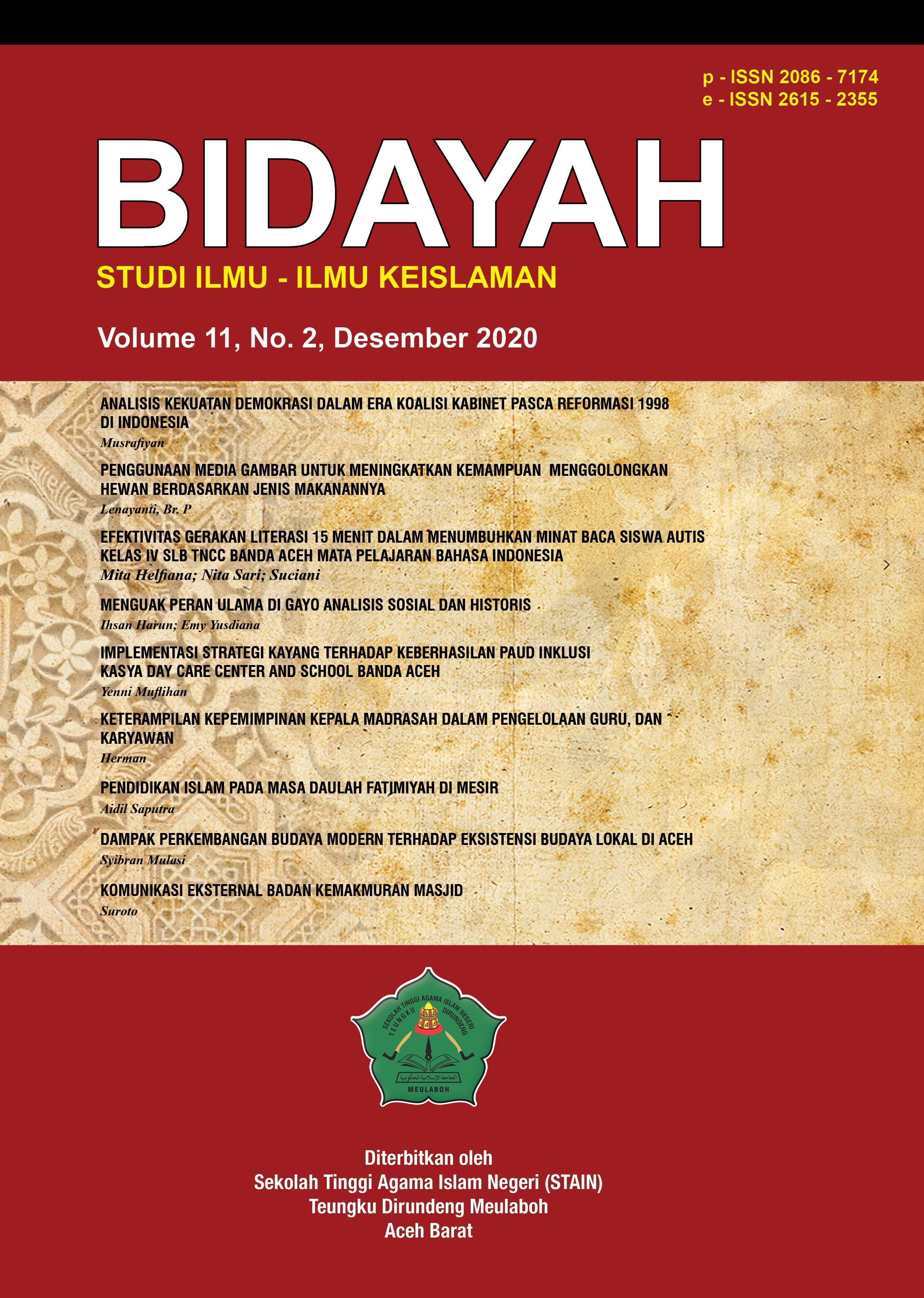
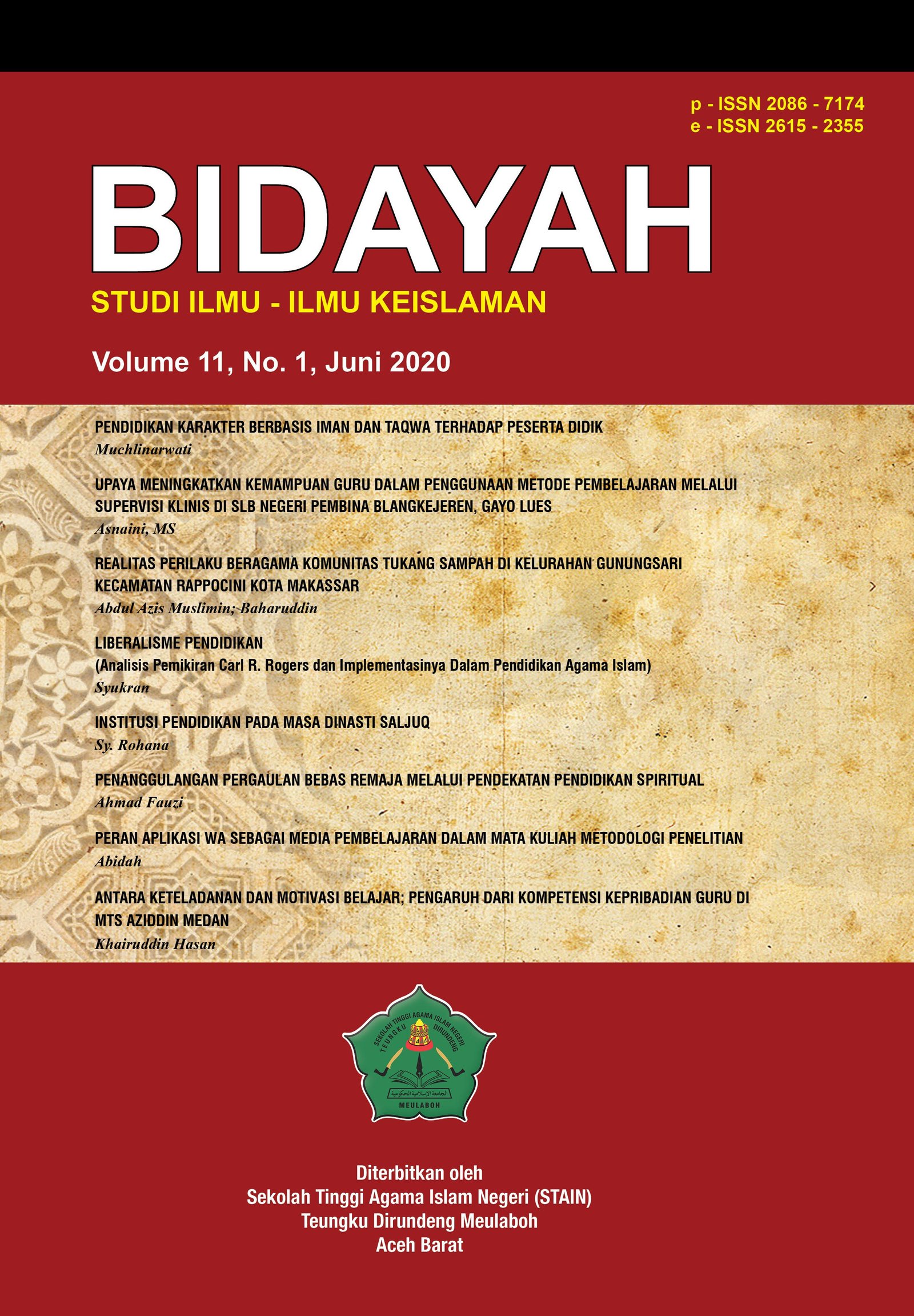
Bidayah: Studi Ilmu Ilmu Keislaman merupakan Jurnal Ilmiah yang berfokus pada usaha pengembangan pemahaman tentang ilmu-ilmu keislaman melalui publikasi artikel hasil penelitian, kajian analisis kritis dan ulasan buku. Jurnal Bidayah: Studi Ilmu-Ilmu Keislaman berisi tentang pendidikan, sosial budaya, hukum, politik dan ekonomi

Bidayah: Studi Ilmu Ilmu Keislaman merupakan Jurnal Ilmiah yang berfokus pada usaha pengembangan pemahaman tentang ilmu-ilmu keislaman melalui publikasi artikel hasil penelitian, kajian analisis kritis dan ulasan buku. Jurnal Bidayah: Studi Ilmu-Ilmu Keislaman berisi tentang pendidikan, sosial budaya, hukum, politik dan ekonomi
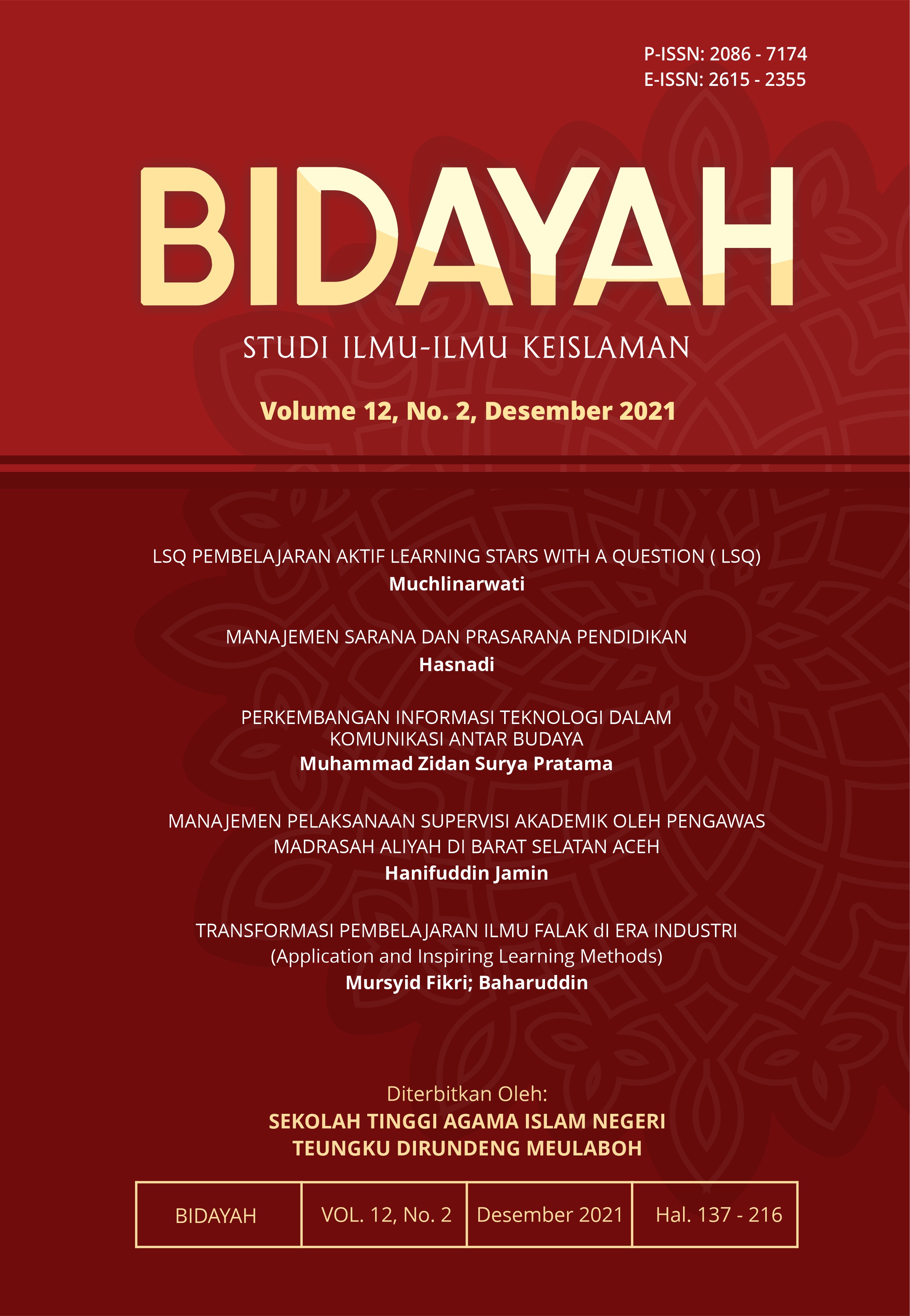
Bidayah: Studi Ilmu Ilmu Keislaman merupakan Jurnal Ilmiah yang berfokus pada usaha pengembangan pemahaman tentang ilmu-ilmu keislaman melalui publikasi artikel hasil penelitian, kajian analisis kritis dan ulasan buku. Jurnal Bidayah: Studi Ilmu-Ilmu Keislaman berisi tentang pendidikan, sosial budaya, hukum, politik dan ekonomi.