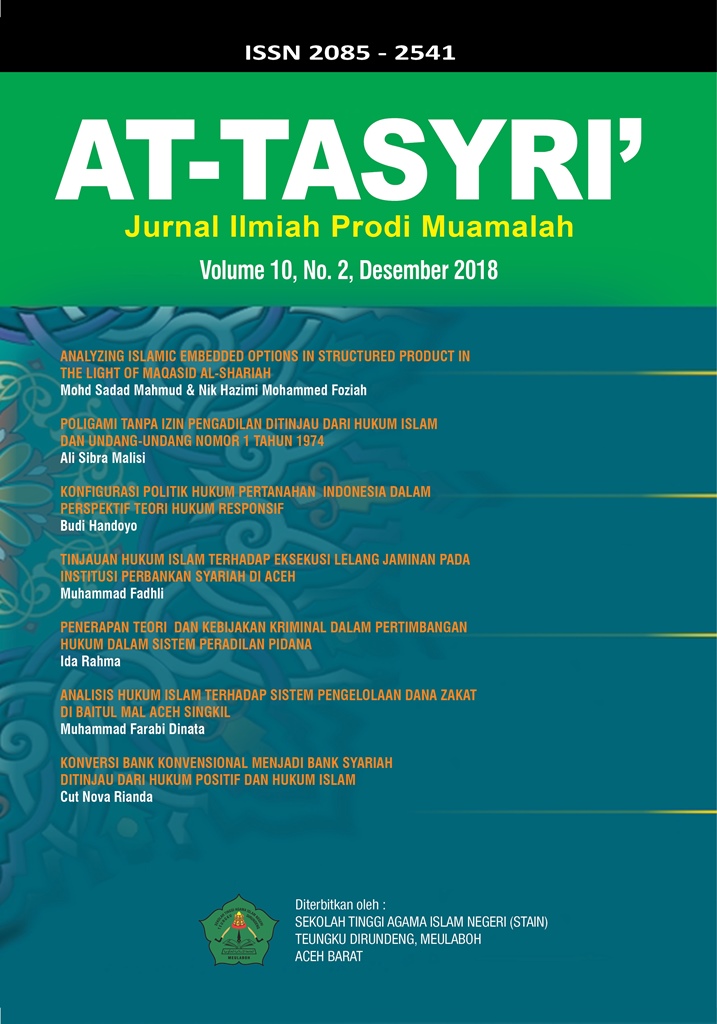
POLIGAMI TANPA IZIN PENGADILAN DITINJAU DARI HUKUM ISLAM DAN UU NO 1 TAHUN 1974
DOI:
https://doi.org/10.47498/tasyri.v10i2.209Abstract
The word polygamy comes from the Greek, polus which means many and gamein or gamos which means marriage. So polygamy is a lot of marriage. Polygamy is a form of marriage where a man at the same time has more than one woman’s wife. As for the reasons Poligami, basically a man can only have a wife. A husband who is married to more than one may be permitted by the parties concerned and the Religious Court has granted permission (Article 3 paragraph (2) of Act Number 1 of 1974). The basis for the granting of polygamy permits by the Religious Courts is set forth in Article 4 paragraph (2) of the Marriage Act (UUP) and also in Chapter IX KHI Article 57. The provisions of polygamy, stipulated in Article 5 of Law Number 1 of 1974 provide conditions against a husband who will be married more than one. Polygamy Procedures. The polygamous procedure under Article 40 of Government Regulation No. 9 of 1974 states that if a husband intends to marry more than one, he is obliged to apply in writing to the court. This is further regulated in Articles 56, 57, and 58 of the Compilations of Islamic Law
Downloads
Downloads
Published
Issue
Section
License
- The right to publish all information contained on this journal’s website is held by the editorial board with the authors’ consent. The journal’s management will uphold the authors’ moral rights.
- The formal legal provisions governing access to all information and articles contained on this journal’s website are based on the terms of the Creative Commons Attribution License (CC BY-SA 4.0) licence, which means that information and articles from the AT-TASYRI’ Journal may only be distributed to third parties, with the author’s permission, for non-commercial purposes, provided that the original form is not altered.
- Every issue of the AT-TASYRI’ Journal, whether in print or electronic form, is open access for educational, research and library purposes. Beyond these purposes, the publisher or journal management accepts no liability for any copyright infringements committed by readers or users.