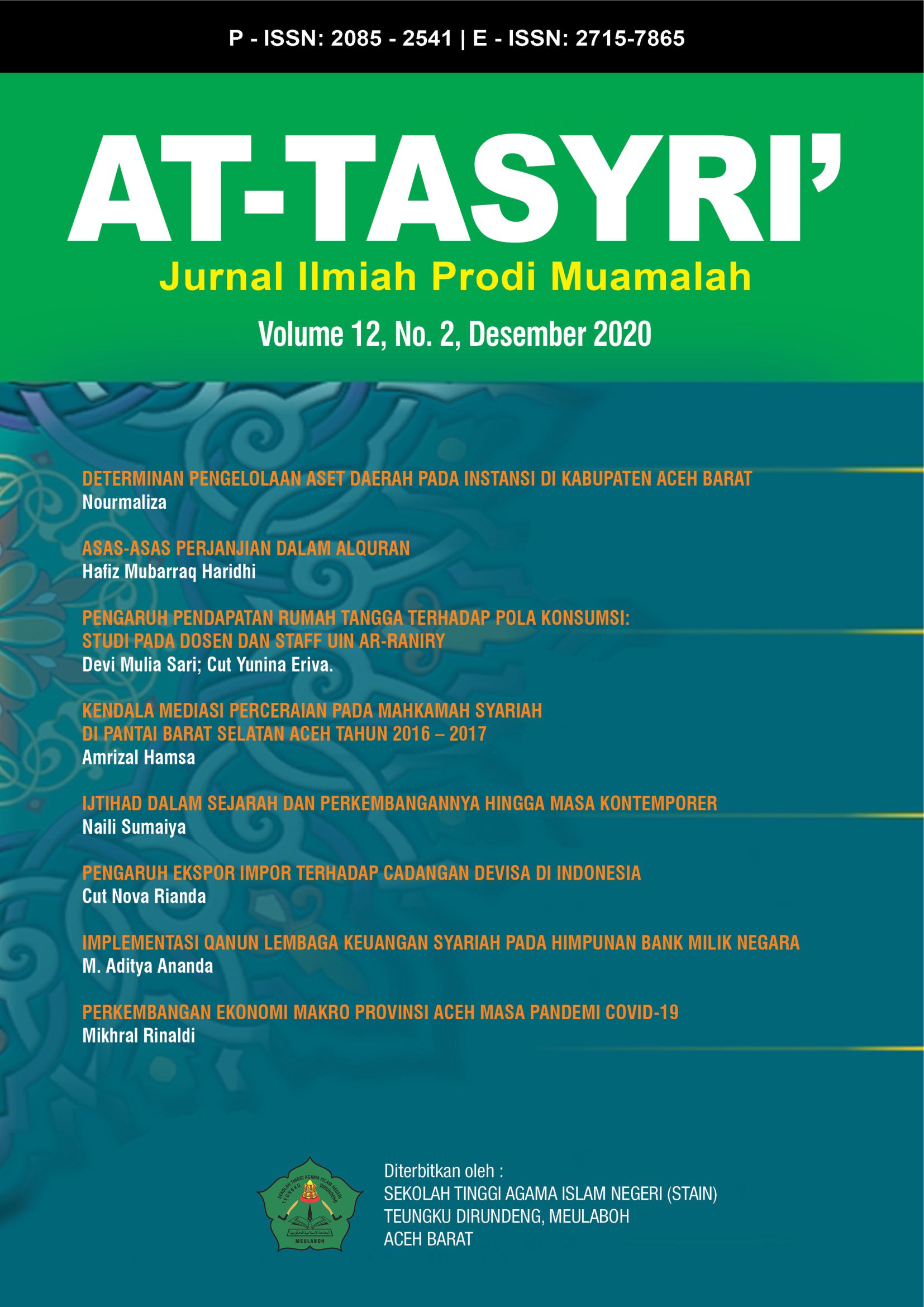
DETERMINAN PENGELOLAAN ASET DAERAH PADA INSTANSI DI KABUPATEN ACEH BARAT
DOI:
https://doi.org/10.47498/tasyri.v12i2.406Keywords:
Competence, Control, Accounting, Management AssetsAbstract
This study aims to examine the factors that influence the management of regional assets agencies in West Aceh District. The unit of analysis in this study is all agencies in West Aceh District, amounting to 29 agencies. Each agencies consists of 3 (three) persons who will be the respondent, namely Head of agencies, Finance Administration Officer, and Activity Technical Officer. Sources of data in this study using primary data that is the results of questionnaires obtained from respondents research. While the technique of collecting research data is done by technique of spreading of questionnaire. The analysis method used is Multiple Linear Regression Analysis. The results showed that the factor of human resource competency, internal control system and accounting information system either jointly or separately affect the management of regional assets agencies in the West Aceh District.
Downloads
References
Asman, A., H. Akram, & M. T. Alamsyah (2016). Faktor-faktor yang Mempengaruhi Optimalisasi Pengelolaan Aset Tetap pada Pemerintah Daerah Kabupaten Sumbawa. Asset, 6(1), 23-38.
Bastian, I. (2006). Akuntansi Sektor Publik: Suatu Pengantar. Jakarta: Erlangga.
Bodnar, G. H. & W. S. Hopwood (2006). Accounting Information System. Ninth Edition. New Jersey: Pearson Education inc-Upper Saddle River.
Christine, I. (2009). Pengaruh Efektivitas Penggunaan dan Kepercayaan pada Teknologi Sistem Informasi Terhadap Kinerja Individual di PT. PLN (Persero) Distribusi Bali Area Pelayanan Gianyar. Jurusan Akuntansi Fakultas Ekonomi Universitas Udayana.
Hamidah, R. T. (2014). Pengaruh Pelaksanaan Sistem Pengendalian Intern Pemerintah dan Sumber Daya Manusia terhadap Pengamanan Aset Negara. Program Studi Akuntansi Fakultas Ekonomi Universitas Negeri Padang.
Hendrikus, S. B. (2009). Pengaruh Sistem Informasi Manajemen dan Sistem Akuntansi Pusat terhadap Efektivitas Pengelolaan Aset Negara pada Kantor Pelayanan Perbendaharaan Negara Surakarta. Daya Saing Jurnal Ekonomi Manajemen Sumber Daya, 10(2), 133-142.
Hutapea, P. dan N. Thoha (2008). Kompetensi Plus. Jakarta: PT Gramedia Pustaka Utama.
Mardiasmo (2002). Otonomi dan Manajemen Keuangan Daerah: Paradigma Baru Pengelolaan Keuangan Sektor Publik. Yogyakarta, Andi.
Michel, R. (2013). Pengaruh Pelaksanaan Sistem Pengendalian Intern Pemerintah dan Peran Inspektorat Terhadap Penyalahgunaan Aset. Skripsi, Universitas Negeri Padang.
Mulyadi (2008). Sistem Akuntansi. Yogyakarta: Salemba Empat.
Raharja, M., R. N. Pratiwi, & A. Wachid (2015). Pengelolaan Keuangan dan Aset Daerah. Jurnal Administrasi Publik (JAP), 3(1), 111-117.
Romney, M. B. & P. J. Steinbart (2009). Accounting Information System. USA: Cengage Learning.
Romney, M. B. (2006). Accounting Information System.Edisi 9. Jakarta. Salemba Empat.
Sekaran, U. (2010). Research Methods for Business: A Skill Building Approach. New Jersey: John Willey & Son.
Sholeh, C., & H. Rachmansyah (2010). Pengelolaan Keuangan dan Aset Daerah. Jakarta: Fokus Media.
Simamora, R., & A. Halim (2012). Faktor-faktor yang Mempengaruhi Pengelolaan Aset Pasca Pemekaran Wilayah dan Pengaruhnya terhadap Kualitas Laporan Keuangan Pemerintah di Kabupaten Tapanuli Selatan. Jurnal Ekonomi dan Bisnis, 10(1), 47-61.
Suhadak & T. Nugroho (2007). Paradigma Baru Pengelolaan Keuangan Daerah dalam Penyusunan APBD. Banyumedia Publishing: Malang.
Susilo, M. (2002). Manajemen Sumber Daya Manusia. Edisi Kedelapan. Yogyakarta: BPFE.
Sutrisno (2009). Manajemen Keuangan Teori, Konsep dan Aplikasi.Yogyakarta: Ekonisia.
Widjajanto, N. (2001). Sistem Informasi Akuntansi. Jakarta: Erlangga.
Downloads
Published
Issue
Section
License
- The right to publish all information contained on this journal’s website is held by the editorial board with the authors’ consent. The journal’s management will uphold the authors’ moral rights.
- The formal legal provisions governing access to all information and articles contained on this journal’s website are based on the terms of the Creative Commons Attribution License (CC BY-SA 4.0) licence, which means that information and articles from the AT-TASYRI’ Journal may only be distributed to third parties, with the author’s permission, for non-commercial purposes, provided that the original form is not altered.
- Every issue of the AT-TASYRI’ Journal, whether in print or electronic form, is open access for educational, research and library purposes. Beyond these purposes, the publisher or journal management accepts no liability for any copyright infringements committed by readers or users.